A beard shaped by a barber in Statesville holds its lines for about two weeks. Then the neckline softens, the cheeks sprout strays, and the mirror starts offering suggestions. Home upkeep between visits is a real skill, and the men who do it well share one trait: they know the job is maintenance, not redesign, and they stop early.
Work this as troubleshooting. Start with the symptom you actually see, find its likely cause, and apply the smallest fix that matches.
Symptom: the neckline keeps creeping higher
Cause: trimming by eye in a head-on mirror, which hides how much neck is actually showing, and chasing symmetry one pass at a time. The fix is the two-finger rule. Place two fingers horizontally above your Adam's apple; the neckline should sit roughly at the top finger. Hair below that line goes, hair above it stays. Set the line once, with your head level, using the rule rather than the mirror's impression, then clean below it in one direction.
If the line is already too high, the only honest fix is time. Let the under-beard grow for two to three weeks without touching the boundary, then reset the line lower with the same rule or let your barber reset it.
Symptom: one cheek line sits higher than the other
Cause: trimming each side independently and matching to memory. Fix it by working in small alternating passes, a few hairs on the left, then the same on the right, stepping back from the mirror between passes. Cheek lines should follow the natural top edge of the beard, cleaned of strays, rather than being cut into a sharp new shape at home. Sharp cheek redesign belongs in the chair, where angles can be seen from the side.
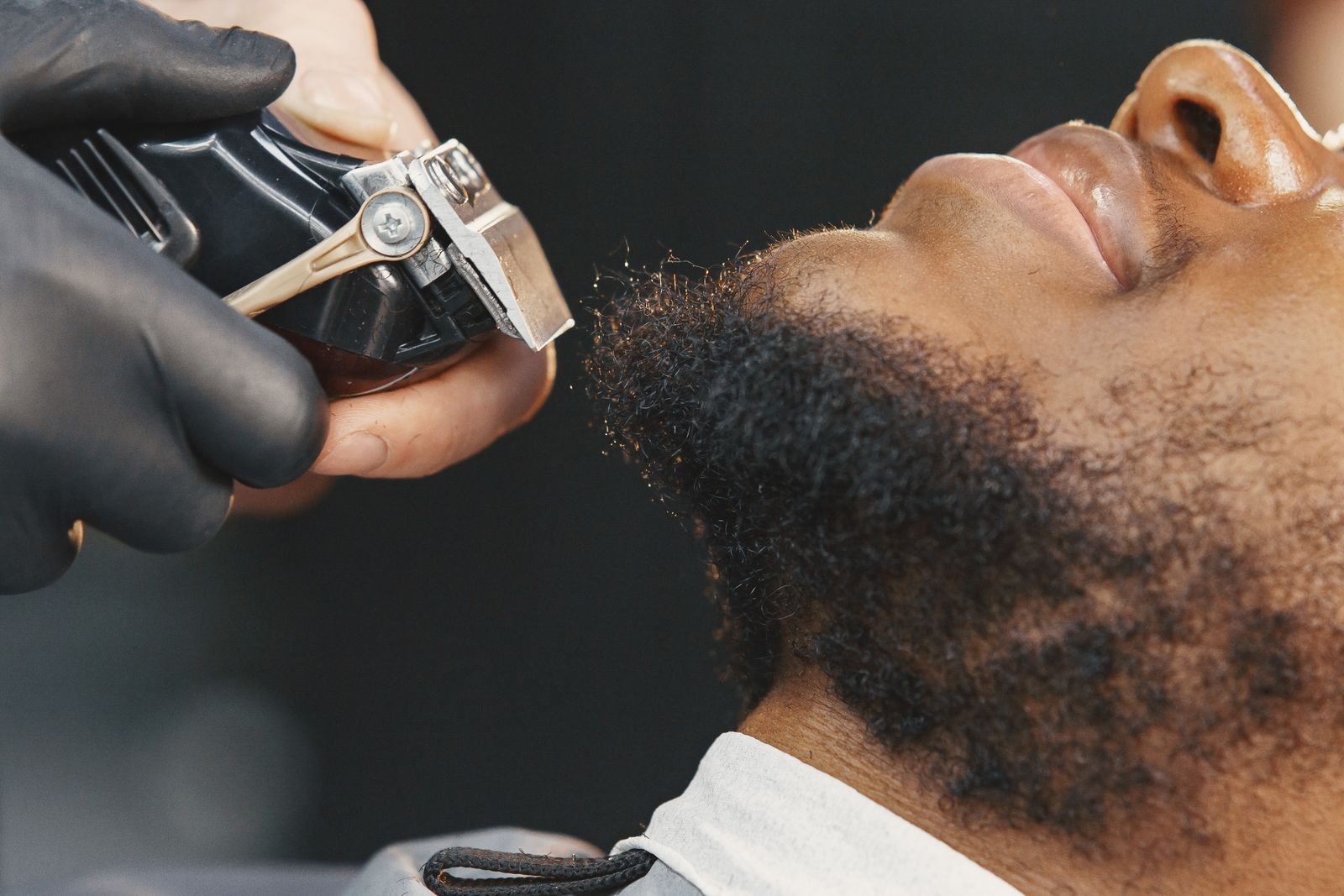
The home session, in order
- Wash and dry the beard first. Wet hair hangs longer and straighter, and trimming wet leads to cutting more than intended once it dries.
- Comb everything down and out to its natural fall. Trim only what you see in that state, not hair you have pushed into place.
- Set the neckline with the two-finger rule, then remove hair below the line with the trimmer, stretching the skin gently for a clean pass.
- Clean the cheeks by removing isolated strays above the natural line. If you are deciding where the line should be, stop: that is barber work.
- Trim flyaways with the comb as a guard: comb up, cut only the tips that poke past the comb, and never dig into the body of the beard.
- Apply a small amount of beard oil to damp-dry hair to soften and settle it. Heat from a dryer on low can help lay a wavy beard straight, used briefly and kept moving.
- Step back and stop. Assess the beard at arm's length in normal light. If it looks even there, it is done, regardless of what the magnifying mirror says.
Symptom: the beard looks thinner after home trimming
Cause: cutting into the bulk while chasing flyaways, usually with scissors pointed into the beard instead of across the surface. The beard's fullness lives in its interior length. Home trimming should only ever address the surface and the boundaries: neckline, cheek strays, and tips that escape the comb. Interior shaping, thinning, and length balancing are exactly what a visit to Austins Barber Shop is for, and barbers would rather reset a soft line than rebuild lost bulk.
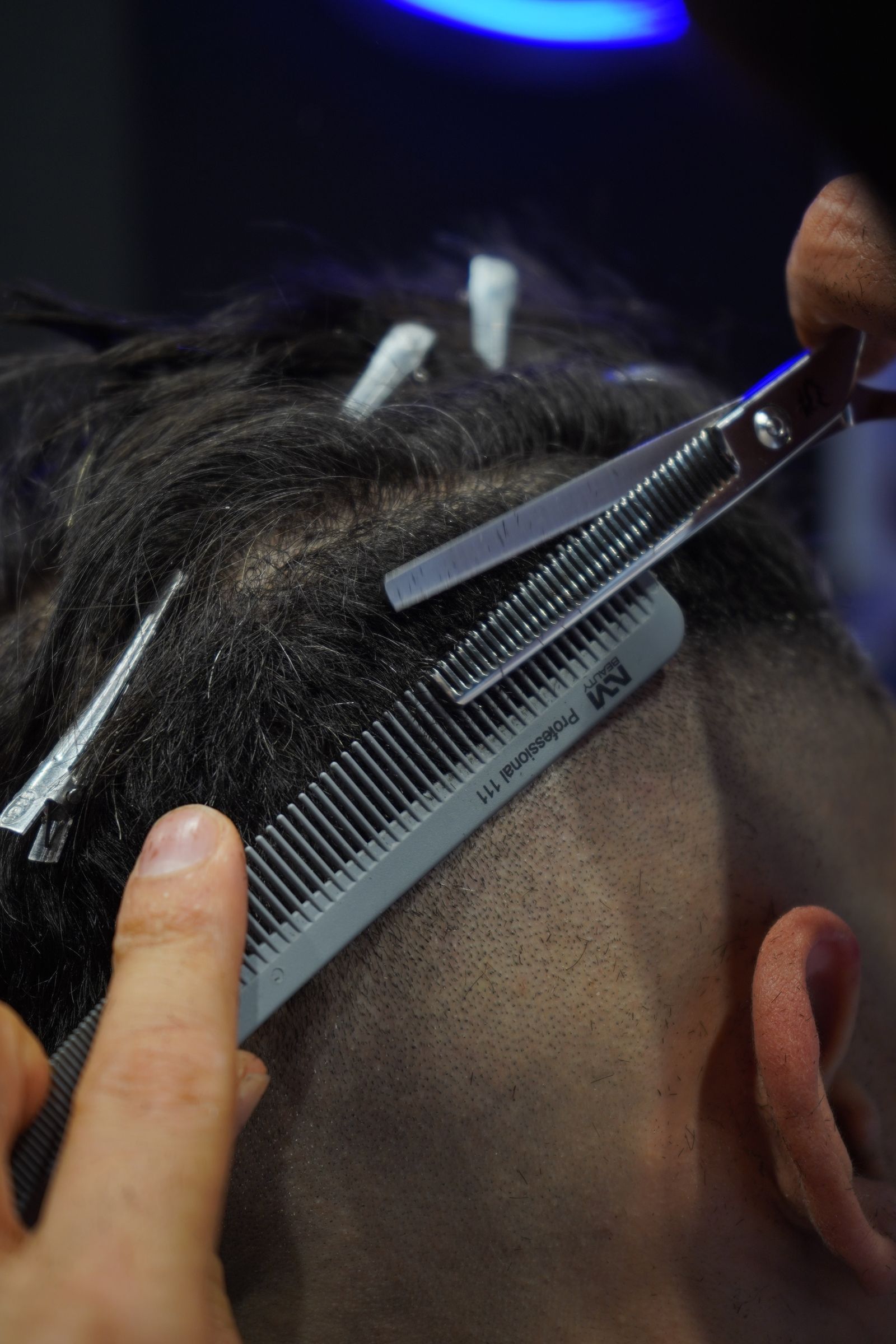
When to stop and book instead
Book a visit if the neckline has migrated, the cheeks no longer match after one careful session, the beard has a visible step or shelf in its profile, or you are planning a change in length or shape. Those are redesign and repair jobs. Home upkeep done right should be almost boring: ten minutes, three zones, no decisions.
Tools that make home work safer
Kit matters more at home than in the shop, because you are working at worse angles with worse light. A trimmer with a steady motor and a guard set you trust, a pair of small sharp scissors, and a comb with both wide and fine teeth cover every home job in this guide. Good light is a tool too: a bathroom mirror under a single dim bulb hides the asymmetry you will see clearly in daylight, so do the final check near a window when you can. Dull scissor blades fold hair instead of cutting it and leave split, frayed tips, so replace or sharpen them when cuts stop feeling crisp.
Common questions
How often should I tidy my beard at home?
About once a week for the neckline and cheek strays during a normal three to four week beard cycle. More frequent sessions raise the risk of over-trimming.
What is the two-finger neckline rule?
Stack two fingers above your Adam's apple and set the neckline near the top finger. It keeps the line low enough to look natural from the side.
Should I trim my beard wet or dry?
Dry, after washing and combing it into its natural fall. Wet hair hangs longer, so trimming wet usually removes more than you intend.
Photos in this guide are representative stock images.
← All guides from Austins Barber Shop← Back to Austins Barber Shop