If you wear glasses every day, your haircut has a second job. It has to work with a frame sitting on your ears and across your temples for twelve or more hours, and it still has to look right in the five minutes your glasses are off. First-time glasses wearers in Statesville often discover this the hard way: a cut that looked sharp in the chair pinches behind the ears by dinner, or the sideburns vanish every time the frames come off.
The fixes are not complicated, but they happen in a specific order. Walk through them at your next visit to Austins Barber Shop and the cut and the frames stop arguing with each other.
The walkthrough, step by step
- Bring the glasses you actually wear. Everyday frames, not sunglasses or an old spare pair. Temple arm thickness and ear bend differ between pairs, and the barber needs the real geometry.
- Start the cut with glasses off, finish with them on. Most cutting is easier without frames in the way, but the final check around the ears and temples must happen with frames seated exactly where you wear them.
- Check temple clearance. The hair above and in front of the ear should clear the temple arm. Hair trapped under the arm gets bent, greasy faster, and pushes the frames slightly out of alignment over a day.
- Set the sideburns against the frame. Sideburns that end right at the temple arm look balanced with glasses on and oddly short with them off. A common solution is ending them at the top or middle of the ear by anatomy, not by where the frame happens to sit.
- Watch the fade height. A high fade that climbs past the temple line can collide visually with thick frames, crowding the side of the head. Mid and low fades usually leave cleaner space for the arm.
- Test the on-off transition. Before you leave, take the glasses off and put them back on twice. The hair should not catch, spring out, or need pushing back into place either way.
- Note what you asked for. Write down the side length and sideburn endpoint that worked. Repeating it next visit is easier than reconstructing it from a photo.
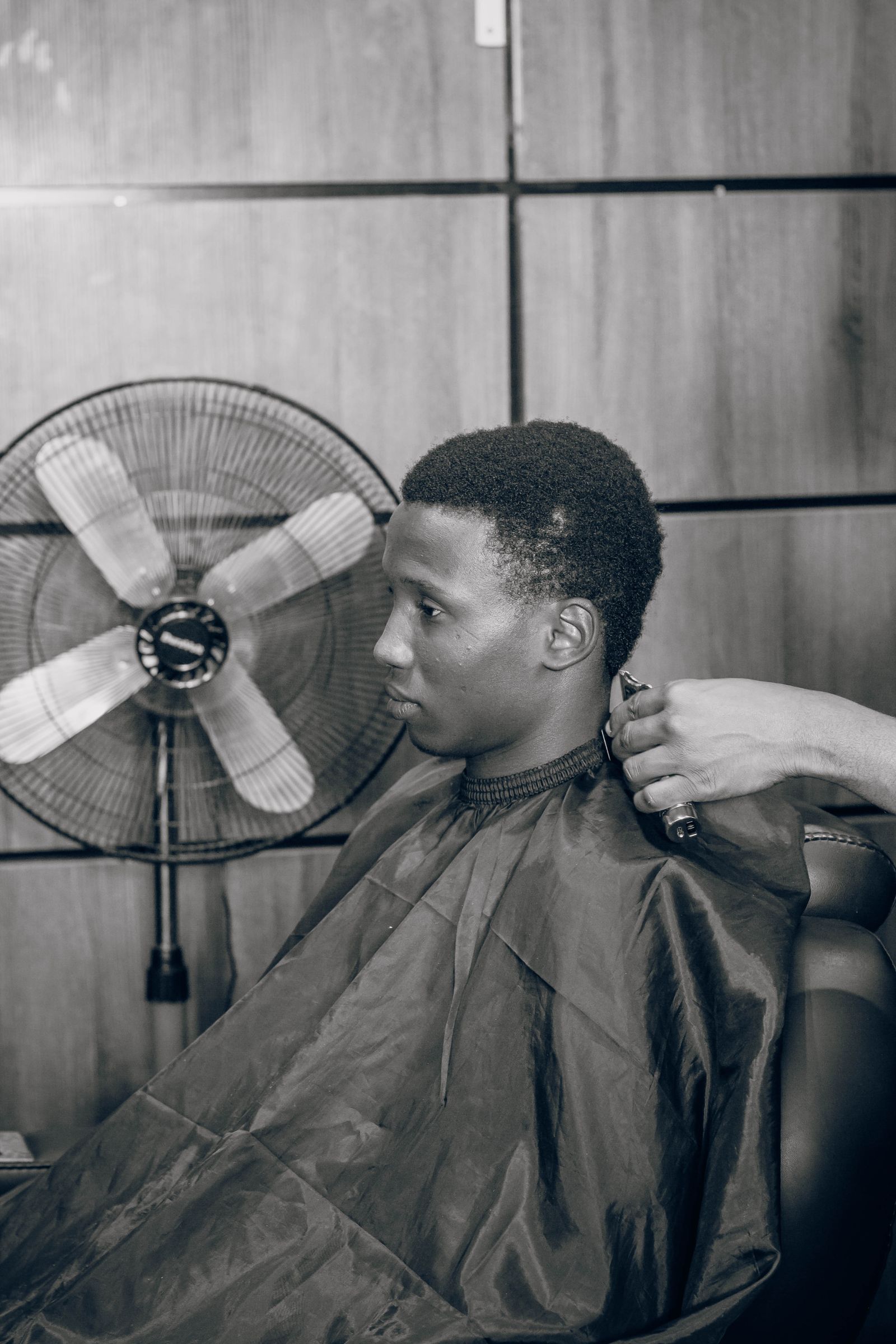
Frames change the apparent shape of a cut
Glasses draw a horizontal line across the face, and thick or dark frames draw it boldly. That line makes the top of the head look taller by contrast and can make a very short, flat top look severe. A little length and texture on top balances the frame line. Thin wire frames do the opposite: they add almost no visual weight, so a heavy, bulky top can overwhelm them. Matching the weight of the cut to the weight of the frame is the quiet trick behind most good glasses-and-hair combinations.
Temple width matters too. Wide frames on a narrow fade can overhang the hair at the sides, which looks fine from the front and strange from the side. Your barber sees the side view you never do, so ask for that check specifically.
Everyday annoyances and their causes
Hair that curls over the top of the ear and gets trapped when you slide glasses on usually means the hair above the ear is a fraction too long, not that the whole cut is wrong. Frames that slip by midday often trace to hair and oil building up where the arms rest; a slightly tighter clearance cut at the temple extends the clean window. Red marks behind the ear after a fresh fade are sometimes the new short hair pressing against the ear bend of the frame until the hair softens after a wash or two.
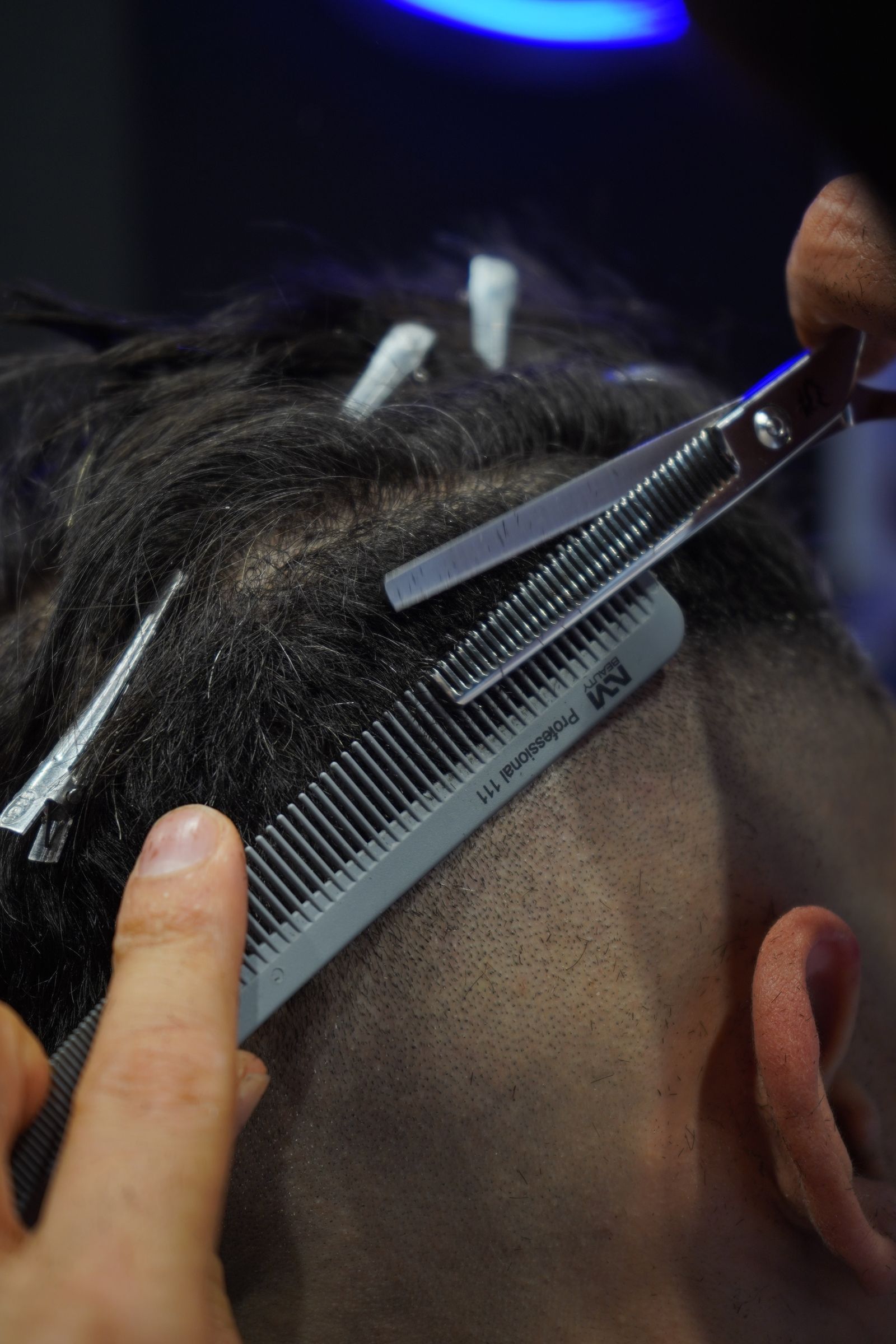
Contacts days and second pairs
If you alternate between glasses and contacts, say so. The cut should be judged both ways, and styles that depend on the frame line for their shape will disappoint on contacts days. A second pair with a very different frame style, such as a thick acetate pair alongside thin metal ones, argues for a middle path: moderate fade height, sideburns set by the ear itself, and enough clearance for the thicker arm.
Common questions
Should I keep my glasses on during the haircut?
Off for most of the cutting, on for the final check around the ears, temples, and sideburns. Bring the pair you wear daily so the check is accurate.
What sideburn length works best with glasses?
Ending at the top to middle of the ear, measured by the ear itself, looks right with frames on or off. Ending at the frame arm usually looks too short once glasses come off.
Do certain fades work better with thick frames?
Low and mid fades generally leave cleaner space for thick temple arms. A high fade can crowd the frame line and trap hair under the arm.
Photos in this guide are representative stock images.
← All guides from Austins Barber Shop← Back to Austins Barber Shop