Trends in men's hair run in short cycles. The cuts underneath them barely move. The side part, the textured crop, and the classic contour have been on barbershop walls in some form for decades, through every fashion swing, because each one is a practical answer to a different head of hair and a different daily routine. In Statesville, barbers still cut all three every week.
The honest way to choose is side by side, on the factors that decide whether you will still like the cut in week three: upkeep, product, hair type, and how the grow-out behaves.
| Factor | Side Part | Textured Crop | Classic Contour |
|---|---|---|---|
| Defining feature | A defined part line with the top combed to one side | Short forward texture with a blunt or soft fringe | Rounded, blended shape following the head, no hard part |
| Best hair types | Straight to wavy, medium density | Straight to thick, including hair that needs taming | Wavy to curly, and most densities |
| Daily effort | Moderate: comb the part in while damp, light product | Low: push forward with fingers, minimal product | Low to moderate: shape with a brush, light product |
| Typical upkeep interval | 3 to 5 weeks | 3 to 4 weeks | 4 to 6 weeks |
| Grow-out behavior | Loses the crisp part line first, stays presentable | Softens evenly, fringe lengthens | Grows out the most gracefully of the three |
| Weakness | Fights strong cowlicks and very curly hair | Can look severe on very fine or thinning hair | Needs enough length to show the shape |
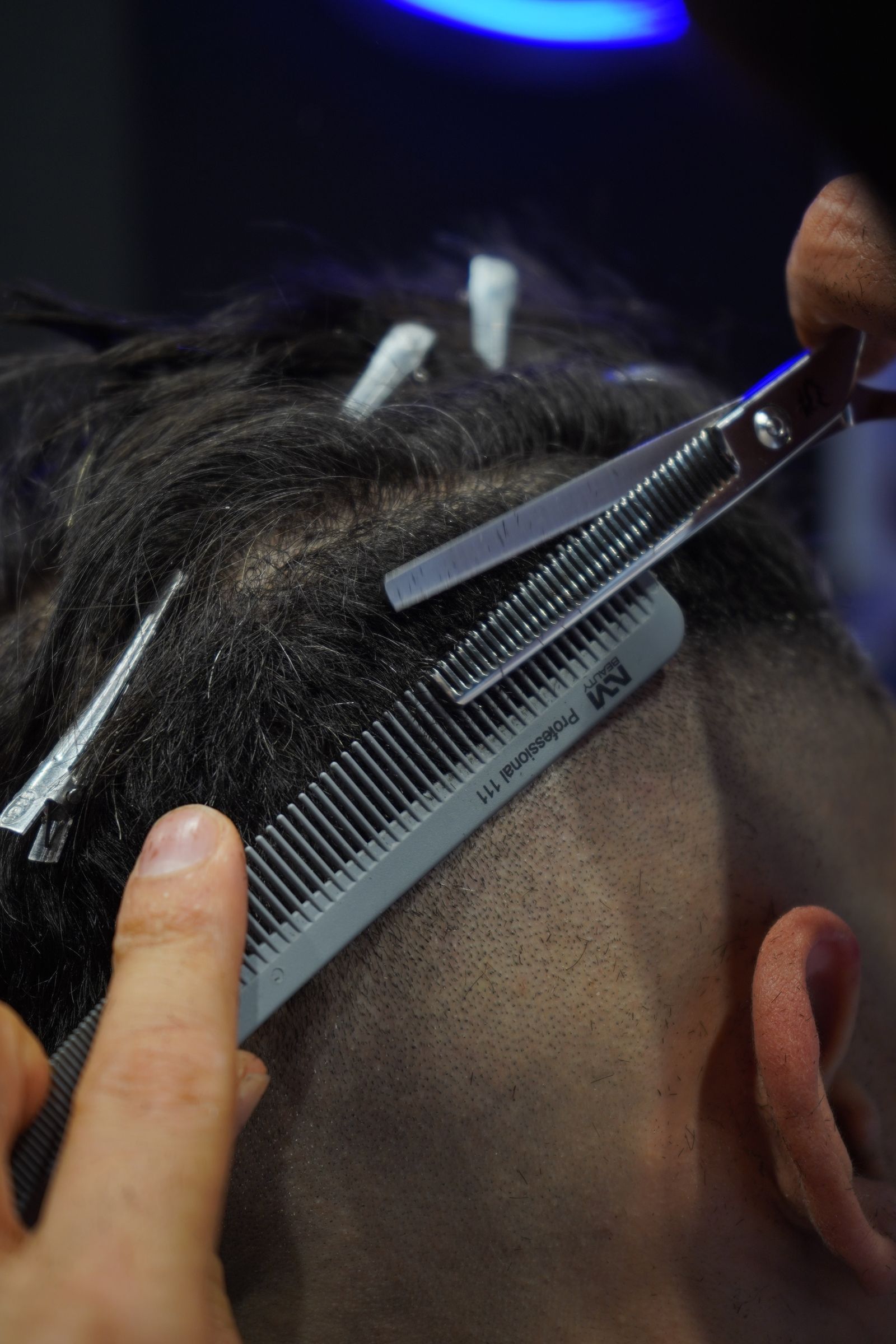
The side part: order with a line
The side part is the most formal of the three. It suits offices, uniforms, and any setting where neat reads as respectful. Its demand is a part that agrees with your natural growth. Forced against a strong cowlick, a part will split the difference by midday and look untidy rather than classic. When the part sits at the natural break, the cut is quick to style: comb it in damp, let it dry, and the line holds.
The crop: short, forward, and forgiving of thick hair
The crop pushes hair forward instead of sideways or back, which makes it the practical pick for thick hair that grows outward and for men who want the lowest daily effort. The fringe can soften a high forehead. Its limit is density: on fine or thinning hair, a short forward cut can show more scalp under bright light, and the barber should adjust length upward rather than forcing the textbook version.
The contour: the shape is the style
The classic contour, sometimes called a regular cut or a taper with a shaped top, follows the round of the head without a hard part or a forward fringe. It is the most adaptable of the three and the kindest grow-out, which is why it suits men who stretch appointments. At Austins Barber Shop, it is also the common recommendation for a first deliberate style after years of buzz cuts, because it adds shape without adding a daily routine.
Pick by your constraints, not by the photo alone. The table above is the real decision tool: match hair type first, daily effort second, and fashion last, and any of the three will serve you for years.
How to ask for each one
The words in the chair are short. For the side part, name the side, say whether you want the part shaved in as a defined line or left natural, and give the top length in plain terms, such as long enough to comb flat. For the crop, say you want the top cut short and textured, pushed forward, with the fringe kept straight across or softened, and name the side finish you want under it. For the contour, ask for a scissor cut shaped to the head with a tapered neckline, and say how much length you want to keep on top. In all three cases a photo of the cut on a man with hair similar to yours settles questions that vocabulary cannot, and barbers genuinely prefer it to a paragraph of description.
Switching between the three
Men rarely wear one cut for life, and moving between these three is easier than most style changes because the lengths overlap. A contour grows into a side part in one visit once the top is long enough to hold a line. A side part becomes a crop by cutting the top shorter and forward, which is a single appointment. Going from a crop back to a contour takes patience rather than skill: the fringe and top need several weeks of growth before there is enough material to shape, and one in-between cut to keep the sides tidy while the top catches up makes that stretch look deliberate instead of overdue.
Common questions
Which of the three needs the fewest barber visits?
The classic contour, typically every four to six weeks. Its blended shape grows out evenly, while the side part and crop show their age sooner.
Which cut is best for thick, unruly hair?
The textured crop. Cutting forward with texture removes bulk and gives thick hair a direction it can keep without much product.
Can I switch from a side part to a contour?
Yes, usually in one or two cuts. The top needs to even out where the part was trained over, and your barber can blend the transition so it looks intentional.
Photos in this guide are representative stock images.
← All guides from Austins Barber Shop← Back to Austins Barber Shop